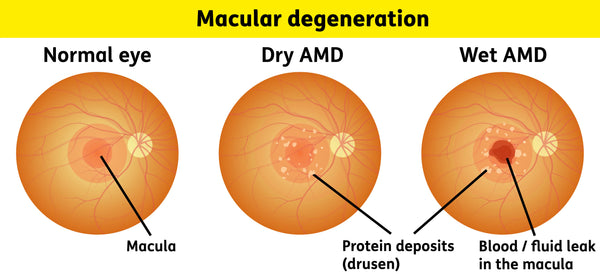
Age-related macular degeneration (AMD) is one of the leading causes of vision loss in adults over 50, and for decades researchers have studied whether nutrition can slow its progression. The answer, backed by one of the largest eye health trials ever conducted, is yes — for the right patients. That trial produced AREDS2, the supplement formula most eye doctors mean when they tell a patient to "take a vitamin for your eyes."
What Is AREDS2?
AREDS2 is the second Age-Related Eye Disease Study, a National Eye Institute trial that followed 4,203 people aged 50 to 85 with intermediate AMD for five years. It built on the original AREDS formula from the 1990s, with one key change: beta-carotene was removed and replaced with lutein and zeaxanthin, two carotenoids naturally concentrated in the retina. The switch mattered because beta-carotene had been linked to a higher lung cancer risk in smokers and former smokers — a population that overlaps heavily with AMD patients.
The resulting formula contains vitamin C (500 mg), vitamin E (400 IU), zinc (80 mg, though a lower 25 mg dose is often used to reduce stomach upset), copper (2 mg), lutein (10 mg), and zeaxanthin (2 mg).
The Clinical Evidence
This isn't a formula built on tradition or guesswork. In the AREDS2 trial, patients who took the formula had a 25% lower risk of progressing to advanced AMD and a 19% lower risk of moderate vision loss compared to those who didn't. That's a meaningful, measured effect in a five-year, placebo-controlled study — which is why AREDS2 remains the standard of care recommendation from the American Academy of Ophthalmology.
Who Actually Needs It
This is where AREDS2 gets misunderstood. The trial specifically enrolled people with intermediate AMD, and the benefit shown applies to that group and to those with late AMD in one eye. If a patient has no signs of AMD, or only early-stage disease, the evidence doesn't support taking the formula — it hasn't been shown to prevent AMD from developing in the first place. Current and former smokers should specifically use the AREDS2 (beta-carotene-free) version, never the original AREDS formula.
In short: AREDS2 is a treatment for a defined stage of disease, not a general-purpose eye vitamin for every patient who walks through the door.
Where Desert Truffle Extract Fits In
AREDS2 targets six specific nutrients. But oxidative stress and inflammation in the eye involve a much broader set of biological pathways than those six compounds alone address — which is where interest in additional antioxidant sources like desert truffle (Terfezia) comes in.
Desert truffle has a long history in the region as a folk remedy for eye ailments, and modern lab research is starting to explain why. Phytochemical analysis of Terfezia extract shows it's rich in phenolics and flavonoids — compounds shown in vitro to scavenge free radicals (including hydroxyl and lipid peroxyl radicals implicated in retinal oxidative damage) and to calm inflammatory activity in immune cells. It also carries natural carotenoids, potassium, iron, and calcium. Because its antioxidant and anti-inflammatory profile works through different compounds than vitamin C, vitamin E, lutein, or zeaxanthin, it's being explored as a complementary source of protection rather than a substitute for any of them.
It's worth being precise about what the evidence currently shows: the research on desert truffle and eye health is largely preclinical and in vitro, or drawn from its traditional use — there isn't yet a large human trial pairing it with AREDS2 the way the NEI trials tested vitamin C, E, zinc, and carotenoids. What the existing data supports is that desert truffle extract brings a distinct, well-documented antioxidant and anti-inflammatory load that plausibly complements the AREDS2 nutrients, filling in some of the biological ground that six isolated nutrients don't cover on their own.
The Takeaway
For patients with intermediate or late AMD, AREDS2 is the evidence-based starting point — that's not up for debate. For patients (and doctors) interested in broadening antioxidant support alongside it, desert truffle extract is an emerging, biologically plausible complement worth watching, grounded in both centuries of traditional use and a growing body of lab research. As with any supplement, patients should talk to their eye doctor before adding something new to an AMD regimen, especially alongside an established formula like AREDS2.
This article is for informational purposes only and is not a substitute for medical advice. Consult an eye care professional before starting or changing any supplement regimen.