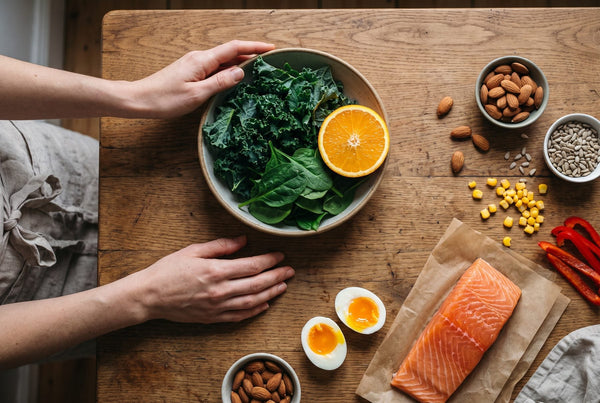
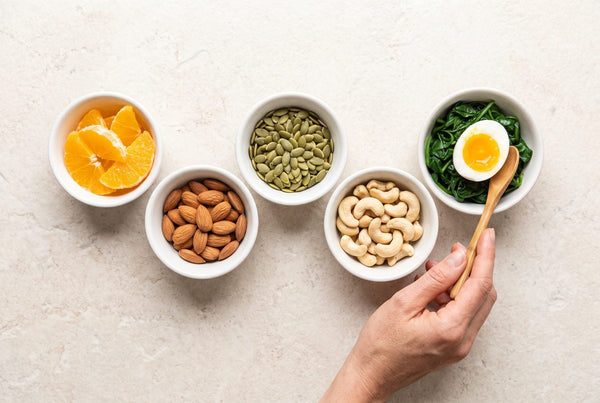
Cooked dark leafy greens top the list. In USDA data, one cup of boiled spinach has 20,300 mcg of lutein and zeaxanthin, followed by Swiss chard (19,200 mcg, an estimate), mustard greens (14,600 mcg), turnip greens (12,200 mcg) and collards (11,800 mcg). USDA reports lutein and zeaxanthin together as one number. Peas, romaine, broccoli, pistachios and eggs have smaller amounts.
Lutein and zeaxanthin are the yellow plant pigments found in the macula, the center of the retina. If you want to know what they do there, our article Lutein and Zeaxanthin: The Yellow Pigment That Shields Your Macula covers it. This article is about the numbers: which foods contain the most, based on U.S. Department of Agriculture (USDA) data.
How to read these numbers
All values come from USDA FoodData Central, in its SR Legacy data set. That is USDA's final release of this data, and it is no longer updated. A few things help make sense of the figures:
- Lutein and zeaxanthin are reported together. USDA lists one combined value, so you cannot see how much of each a food has.
- Values are in micrograms (mcg). 1 mg equals 1,000 mcg. The AREDS2 eye vitamin formula uses 10 mg of lutein and 2 mg of zeaxanthin, so 12,000 mcg in total.
- Same weight versus a typical portion. The ranking uses the amount in 100 grams (about 3.5 ounces), so every food is compared at the same weight. The portion column shows a common serving from USDA.
- Measured versus estimated. Most values were measured (USDA calls these analytical values). A few, marked with an asterisk (*), were estimated (imputed) by USDA from another form of the food, a similar food or other nutrients.
The ranking: lutein and zeaxanthin per 100 grams
"Cooked" means boiled and drained, without salt, as USDA describes each entry. Click a food name to see its USDA page.
| Rank | Food | Per 100 g | Per USDA portion |
|---|---|---|---|
| 1 | Spinach, raw | 12,200 mcg | 1 cup (30 g): 3,660 mcg |
| 2 | Spinach, cooked | 11,300 mcg | 1 cup (180 g): 20,300 mcg |
| 3 | Swiss chard, cooked* | 11,000 mcg | 1 cup, chopped (175 g): 19,200 mcg |
| 4 | Mustard greens, cooked | 10,400 mcg | 1 cup, chopped (140 g): 14,600 mcg |
| 5 | Turnip greens, cooked | 8,440 mcg | 1 cup, chopped (144 g): 12,200 mcg |
| 6 | Collards, cooked | 6,200 mcg | 1 cup, chopped (190 g): 11,800 mcg |
| 7 | Kale, cooked | 4,980 mcg | 1 cup (118 g): 5,880 mcg |
| 8 | Pistachios, raw | 2,900 mcg | 1 oz, 49 kernels (28.35 g): 822 mcg |
| 9 | Green peas, cooked* | 2,590 mcg | 1 cup (160 g): 4,140 mcg |
| 10 | Green peas, frozen, cooked | 2,400 mcg | 1/2 cup (80 g): 1,920 mcg |
| 11 | Romaine lettuce, raw | 2,310 mcg | 1 cup, shredded (47 g): 1,090 mcg |
| 12 | Brussels sprouts, cooked | 1,290 mcg | 1/2 cup (78 g): 1,010 mcg |
| 13 | Pistachios, dry roasted | 1,160 mcg | 1 oz, 49 kernels (28.35 g): 329 mcg |
| 14 | Zucchini, with skin, cooked | 1,150 mcg | 1 cup, sliced (180 g): 2,070 mcg |
| 15 | Egg yolk, raw* | 1,090 mcg | 1 large yolk (17 g): 185 mcg |
| 16 | Broccoli, cooked | 1,080 mcg | 1/2 cup, chopped (78 g): 842 mcg |
| 17 | Sweet yellow corn, cooked* | 906 mcg | 1 cup, cut (149 g): 1,350 mcg |
| 18 | Egg, whole, hard-boiled* | 353 mcg | 1 large (50 g): 176 mcg |
| 19 | Avocado, raw | 271 mcg | 1 cup, cubes (150 g): 406 mcg |
| 20 | Sweet red pepper, raw | 51 mcg | 1 cup, chopped (149 g): 76 mcg |
| 21 | Pumpkin, canned | 0 mcg | 1 cup (245 g): 0 mcg |
*Estimated by USDA rather than measured: Swiss chard, cooked green peas, sweet corn and hard-boiled egg were estimated from another form of the food or a similar food, and raw egg yolk from other nutrients. SR Legacy has no entry for cooked egg yolk.
What a typical portion looks like
People rarely eat exactly 100 grams of anything, so the chart below ranks most of the same foods by a common USDA portion. The dashed line marks 12,000 mcg, the combined lutein and zeaxanthin in the AREDS2 formula.

By portion, a cup of cooked spinach, Swiss chard, mustard greens or turnip greens each has more than 12,000 mcg, and a cup of cooked collards comes close.
Why cooked spinach beats raw spinach by the cup
Per 100 grams, raw spinach (12,200 mcg) and cooked spinach (11,300 mcg) are close. The big difference is in the cup. USDA's cup of raw spinach weighs 30 grams, while its cup of cooked spinach weighs 180 grams, six times as much. In other words, a cooked cup holds far more spinach by weight.
That is why a cup of raw spinach lists 3,660 mcg and a cup of cooked spinach lists 20,300 mcg. For another comparison, USDA lists a 10-ounce package of raw spinach at 34,600 mcg.
A closer look at the list
How solid are the top numbers?
Some values rest on more lab samples than others. USDA's cooked spinach value is based on 24 data points, and raw spinach on 7 (ranging from 9,500 to 15,900 mcg per 100 grams). Mustard greens rest on 3 data points and turnip greens on 2. Swiss chard has none; its value is an estimate. Brussels sprouts and canned pumpkin each rest on a single data point.
Peas: estimated versus measured
USDA's value for cooked fresh green peas (4,140 mcg per cup) is an estimate. Frozen peas, cooked, were measured: 1,920 mcg in half a cup.
Zucchini and summer squash
USDA also lists "summer squash, all varieties, cooked" at 2,250 mcg per 100 grams, higher than zucchini. That value is estimated, while the zucchini value (1,150 mcg) was measured from 6 data points. We used the measured zucchini figure.
Pistachios: raw versus dry roasted
USDA lists raw pistachios at 822 mcg per ounce and dry roasted pistachios at 329 mcg per ounce. The raw value rests on just 2 data points with a wide range (1,400 to 4,400 mcg per 100 grams).
Eggs
A large hard-boiled egg is listed at 176 mcg and a large raw egg yolk at 185 mcg. Both are estimates, and both are small next to a serving of cooked greens.
Two foods you may have expected
Canned pumpkin: USDA lists 0 mcg of lutein and zeaxanthin for canned pumpkin without salt, based on one data point. Based on USDA data, it is not a source. We did not check other forms of pumpkin.
Orange bell peppers: you may see these named as a source elsewhere, but we could not find a USDA value to confirm it. SR Legacy has no orange pepper entry, and USDA's Foundation Foods entry for raw orange bell peppers has no lutein and zeaxanthin value. The yellow sweet pepper entry has none either. The closest measured entry, raw sweet red pepper, lists 51 mcg per 100 grams.
Keep in mind: eating an amount that matches a supplement dose is not the same as getting a trial result. The AREDS2 findings came from supplements taken by people with intermediate AMD, or late AMD in one eye. The trials did not test eating these foods. Our article Can you get AREDS2 nutrients from food? compares every nutrient in the formula with food.
Why these foods come up in eye health
The NIH Office of Dietary Supplements (ODS) says lutein and zeaxanthin "accumulate in the retina, the tissue in the eye that is damaged by AMD." No Recommended Dietary Allowance has been set for them. ODS also reports that in AREDS2, people with the lowest lutein and zeaxanthin in their diets had a 26% lower risk of advanced AMD when they took them as supplements. That was a finding in one subgroup of the trial.
The National Eye Institute (NEI) lists eating healthy foods, including leafy green vegetables and fish, among the choices that may lower your risk of AMD. The American Academy of Ophthalmology also suggests pairing any AMD supplement with a diet rich in dark leafy greens and colorful fruits and vegetables. For the wider research picture, see Nutrition and eye health: what the research shows.
If you take warfarin
If you take the blood thinner warfarin, MedlinePlus advises keeping the amount of vitamin K foods you eat consistent and not eating large amounts of leafy greens, so check with your doctor before changing your diet. The ODS vitamin K fact sheet explains that sudden changes in vitamin K intake can increase or decrease warfarin's effect. Many of the same greens that are high in lutein are also high in vitamin K:
| Food (ODS) | Vitamin K |
|---|---|
| Collards, frozen, boiled, 1/2 cup | 530 mcg |
| Turnip greens, frozen, boiled, 1/2 cup | 426 mcg |
| Spinach, raw, 1 cup | 145 mcg |
| Kale, raw, 1 cup | 113 mcg |
| Broccoli, chopped, boiled, 1/2 cup | 110 mcg |
| Egg, hard-boiled, 1 large | 4 mcg |
For comparison, ODS lists an adequate intake of 120 mcg of vitamin K a day for men and 90 mcg for women. Our article on AREDS2 and blood thinners has questions to bring to your doctor.
Frequently asked questions
Which vegetable has the most lutein?
In USDA data, spinach ranks first by weight, and a cup of cooked spinach (20,300 mcg) is the highest single portion on our list. Remember that USDA combines lutein and zeaxanthin into one value.
Is kale as high as spinach?
Not in USDA data. A cup of cooked kale lists 5,880 mcg, less than a third of the 20,300 mcg in a cup of cooked spinach. Both values were measured.
Do I need a supplement if I eat plenty of greens?
That depends on whether you have AMD and what stage it is. NEI's AREDS/AREDS2 FAQ says the formulas benefited people with intermediate or late AMD, not people with early AMD or no AMD. See Can AREDS2 prevent macular degeneration? If you are comparing formulas, our science page lists the doses used in the trials.
Related reading
- Can you get AREDS2 nutrients from food?
- 5 vitamins and nutrients that matter for your eyes
- Omega-3s, fish oil and your eyes
- Lutein and zeaxanthin: the yellow pigment that shields your macula
References
- U.S. Department of Agriculture, Agricultural Research Service. FoodData Central, SR Legacy, nutrient "Lutein + zeaxanthin" (FDC IDs 168462, 168463, 170401, 169257, 170466, 170407, 169238, 170184, 170420, 170017, 169247, 169971, 170185, 169292, 170488, 172184, 169967, 169999, 173424, 171705, 170108, 168450). fdc.nal.usda.gov
- NIH Office of Dietary Supplements. Vitamin A and Carotenoids: Fact Sheet for Health Professionals (updated March 10, 2025). ods.od.nih.gov
- NIH Office of Dietary Supplements. Vitamin K: Fact Sheet for Health Professionals (updated March 29, 2021). ods.od.nih.gov
- MedlinePlus. Warfarin (last revised March 15, 2026). medlineplus.gov
- National Eye Institute. Age-related macular degeneration (updated June 22, 2021). nei.nih.gov
- National Eye Institute. About AREDS and AREDS2 (updated October 22, 2025). nei.nih.gov
- National Eye Institute. AREDS/AREDS2 frequently asked questions (updated November 19, 2020). nei.nih.gov
- American Academy of Ophthalmology. Vitamins for AMD (August 19, 2026). aao.org
This article is for general education and is not medical advice. Talk with your eye doctor before starting any supplement, especially if you smoke, take other medicines, or have a health condition. These statements have not been evaluated by the Food and Drug Administration. TruVista products are not intended to diagnose, treat, cure, or prevent any disease.